Biscuits and cookies
Single products, portions or stable stacks with controlled transfer and crumb management.

Create consistent pillow packs around individually presented food products or stable groups, with print registration and coding options defined around the chosen film.

Food products combine presentation requirements with practical issues such as crumbs, breakage, grease, temperature and shelf-life targets.
The LUZB350X published machine data includes biscuits, cookies, snack bars, candy and marshmallows among its typical applications. The final infeed and sealing configuration must reflect the product’s actual shape, strength and surface condition.
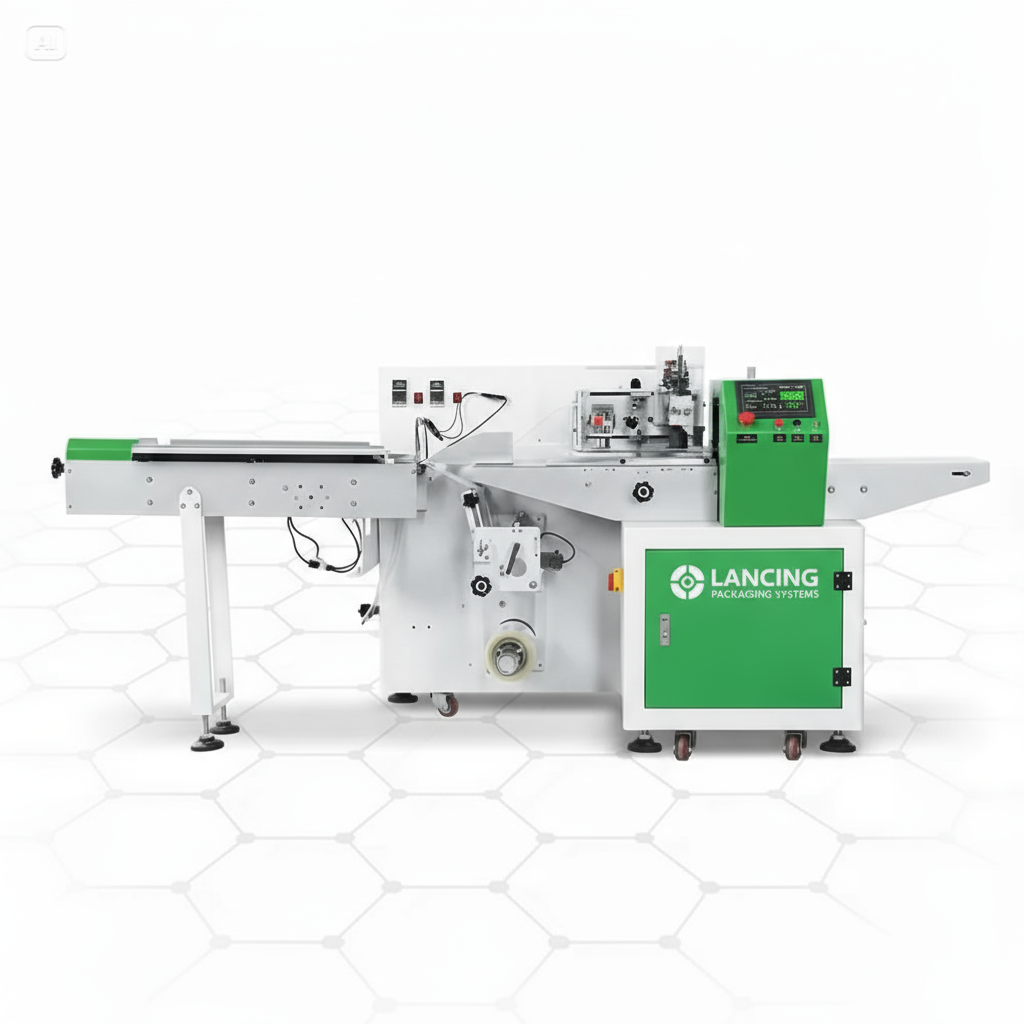
Each product still requires a format and feeding review.
Single products, portions or stable stacks with controlled transfer and crumb management.
Regular bars can be timed into the film former using manual, lugged or automatic feeding.
Candy and marshmallow formats where heat, stickiness and product spacing are addressed.
Multipacks of primary packs where the group remains aligned through the wrapping cycle.
| Area | Information to supply | Why it matters |
|---|---|---|
| Product | Minimum/maximum length, width, height, weight and photographs | Defines the former, infeed, jaw clearance and format range |
| Condition | Temperature, grease, crumbs, stickiness and fragility | Influences contact materials, guides, cleaning and seal reliability |
| Film | Structure, thickness, reel width, core, print repeat and eye mark | Determines film path, sealing window and registration setup |
| Output | Required sustained rate and upstream delivery pattern | Sets the infeed concept and realistic line capacity |
| Compliance | Food-contact documentation, cleaning method and site standards | Allows the project scope and documentation to be agreed |
A wrapper cannot recover product spacing that is irregular at the infeed.
Review how products leave the process, whether they need buffering, how rejects are managed and how operators access the line. Automatic feeding can reduce handling, but only when the product arrives in a predictable condition.
Use sustained upstream output, changeover losses, cleaning, film changes and quality checks when estimating required capacity.
Yes, where the film and artwork provide a suitable registration mark and repeat. The eye-mark contrast, repeat length and print tolerance should be confirmed before machine build.
Product handling should minimise breakage, while the infeed and sealing area should be designed so loose crumbs are not trapped in the end seal. Trials are valuable for crumbly products.
Controlled multipacks are possible when the grouped items remain stable through transfer, film forming and sealing. Guides, lugs or a carrier may be needed.
Shelf life depends primarily on the product, film barrier, seals, atmosphere and storage conditions. The flow wrapper forms the pack, but shelf-life validation belongs to the product and packaging specification.
Good packs begin before the film former. The infeed has to accept normal product variation, establish the correct pitch and keep food away from the sealing jaws.
Assess breakage at every transfer, product thickness variation and crumb generation. Controlled acceleration, short transfer gaps and suitable guides help protect the product and seal area.
Check surface tack, temperature, coating condition and whether products can touch or overlap. Cooling, separation and positive pitch control may be necessary before wrapping.
Define the count, group pattern and how the group remains stable. A collator, pusher, tray, card or carrier may be required if loose items cannot travel as one repeatable pack.
A speed result is useful only when the packs also meet the agreed quality checks. Run representative product and production film for long enough to expose normal variation and replenishment stops.
| Area | Questions to answer | Evidence to record |
|---|---|---|
| Product condition | Does the product break, mark, melt, stick, roll or create crumbs during transfers? | Damage count, photographs and the machine settings used for the accepted run. |
| Pitch and orientation | Can every product reach the jaws in the correct position without doubles or gaps? | Missing-product response, jam points and good packs per minute. |
| Film and registration | Does the web track and does the eye mark hold artwork and cut position? | Print-to-cut variation, reel data and registration settings. |
| Seal quality | Are longitudinal and end seals continuous and clear of crumbs or product? | Visual checks and any agreed seal-integrity test method. |
| Coding and inspection | Is the code legible and is inspection positioned after the pack is stable? | Code samples, reject challenge and reject confirmation. |
| Cleaning and allergen control | Can food-contact and crumb areas be reached using the site’s approved method? | Cleaning sequence, access review and restart checks. |
Loose powders, granules and products that must be dosed into a bag normally require a vertical form fill seal route. Grouped trays, cartons or bottle bundles that need film to shrink tightly may require shrink wrapping instead.
Use the specialist form fill seal resource for powder, granule, liquid, paste, sachet and pouch applications.
Explore vertical form fill sealUse the dedicated shrink-wrapping resource for L-sealers, sleeve sealers, chambers and heat tunnels.
Explore shrink wrapping machineryThe gap between products must leave enough film and time for the end-seal jaws to close without touching food. Inconsistent pitch can create empty packs, product in the seal, poor cuts or jams, so the infeed and upstream process must be assessed together.
It should prove gentle transfer, stable orientation, acceptable breakage and crumb levels, clean seals, correct artwork and code position, sustained good output and repeatable recovery after normal stops using representative product and production film.
A food flow wrapper cannot correct unstable product arriving from cooling, cutting, depositing or transfer. Define the product condition and delivery pattern at the actual wrapping point, then test the film and seals under those conditions.
| Production input | Why it changes the flow-wrap result | What to include in the trial |
|---|---|---|
| Product condition | Temperature, softness, surface oil, toppings or moisture can alter belt friction, handling and film contact. | Representative product at the normal earliest, nominal and latest wrapping condition. |
| Spacing and orientation | Random gaps, doubled items or rotation can place product in the crimp-jaw area or create empty packs. | The real upstream arrival pattern and the proposed timing, flighting or manual-loading method. |
| Crumbs and residue | Loose material can collect around guides or enter the longitudinal and end seals. | Difficult production samples, the intended cleaning routine and checks after a sustained run. |
| Film and barrier objective | The complete film structure must form, track and seal while supporting the required pack function. | Production film, approved pack, supplier data and the customer’s agreed seal or storage assessment. |
| Artwork and coding | Print repeat, registration mark, code area and cut position share the same moving web. | Final or representative artwork repeat, eye mark, unwind direction, code content and verification rule. |
| Downstream handling | Warm seals and light pillow packs can be marked, shingled or compressed by later conveyors and packing equipment. | The intended discharge, inspection, accumulation and case-packing route at representative rate. |
The format should work across the normal product and process window. Include the smallest, largest and most fragile or difficult variants, plus the stop and restart conditions operators will see during a production shift.
Record dimensions, weight, shape, condition and surface variation. Where several items share a wrapper, identify which guide, former, pitch and bag-length settings change and which remain common.
Check product disposition when the wrapper is starved or downstream is blocked. Agree how empty film, suspect packs, product near the jaws and first-off packs are handled after restart.
Include the production site’s required cleaning sequence, access and release checks. A new film, recipe or product condition that changes handling or sealing should be re-qualified against the agreed pack standard.
Measure accepted packs over an agreed run using production product and film. Record breakage, seal contamination, misregistration, stops and rejects so the sustainable bakery-line result is visible.
They may be suitable, but the trial should use product at the real wrapping temperature and condition. Heat, softness, surface moisture or oil can change transfer, film contact and seal performance, so suitability cannot be confirmed from a cold sample alone.
Crumbs or loose inclusions trapped between the heated jaw faces and film can interrupt contact, create channels, mark the pack or affect cutting. Product guides, pitch and housekeeping should keep the sealing zone clear.
A tray, card or carrier can be considered when a fragile, sticky or unstable product needs support or when a group must remain aligned. The complete product-and-carrier assembly should be trialled for dimensions, film forming and seal clearance.
Create or review a separate format when dimensions, pitch, film, artwork repeat, product condition, guide or former setup, sealing window, code position or inspection rule changes enough to affect the approved pack or sustained output.
Bakery and confectionery products can change with temperature, cooling time, recipe, surface finish and upstream output. Use representative variation to qualify the infeed and film, then retain an approved pack and recipe for changeover and fault diagnosis.
Assess manual, flighted, metered or automatic feeding around breakage, crumbs, touching products and restart conditions.
Feeding-system guideUse production film and the tallest, longest and most contaminated edge cases when comparing jaw motion and seal dwell.
Rotary vs box motionRecord cleaning, first-off approval, format settings and evidence for recurring seal or registration faults.
Maintenance and changeoverIf pack quality changes, separate product, film, setup, mechanical, line and sensor causes using the flow-wrapper troubleshooting guide.
A food flow-wrapping project may also require controlled atmosphere, traceability coding and inspection. Those functions must be specified around the actual product, shelf-life study, legal duties and accepted pack.
Understand why gas delivery, barrier film, seals, pack volume and product-specific food-safety controls must be assessed together.
Gas-flush flow-wrapping questionsDefine the code area, moving-film window, inspection result and physical reject path before line integration.
Coding and inspection integrationThe packaging machine can only repeat the product condition and arrival pattern supplied by the wider process. Qualify the difficult production states, not only an ideal sample.
Warm bakery products may be candidates, but the actual wrapping temperature must be included in the product trial. Temperature can change softness, surface condition, belt friction, film contact and the risk of crumbs or product entering the end seals. Test the earliest, normal and latest realistic wrapping condition rather than relying on room-temperature samples.
Use a feeding method that controls orientation and pitch without unacceptable contact with the fragile surface. The weakest normal product, loose toppings and dimensional variation should be included in the trial. Manual loading, flighted conveyors, timing belts, collators or robotic presentation may be considered according to the actual upstream arrival pattern.
A tray or support may help when the product cannot transfer or retain shape consistently on the infeed, but it changes the product envelope, film width, pack length and waste profile. The complete trayed product must be measured and tested; a tray is not a substitute for confirming seal clearance and downstream pack stability.
Run enough representative product to show where crumbs or residue accumulate and whether they enter the longitudinal or end-seal areas. Agree the inspection and cleaning points, safe access, cleaning frequency and the good-pack checks after restart. A short clean demonstration may not reproduce a sustained production duty.
Use representative biscuits at the normal wrapping condition and assess transfers, drops, guides, belt speeds, flights and accumulation. Fragile products may need gentler metering, support, a tray or a different grouping method. The accepted solution must be proved over a sustained run, not only by hand-feeding ideal samples.
Control product pitch and orientation so the crimp jaws close in clear film, then manage loose crumbs through product handling, housekeeping and accessible cleaning. A contaminated seal should be treated as a process fault rather than corrected only by increasing temperature.
They can be considered when the count, stack or group remains stable through the former and end-seal area. The infeed may need counting, stacking, supports or a tray, and the complete group dimensions and product variation must be included in the trial.
No. Cold seal may reduce heat exposure for a suitable product, but it requires a compatible coated film, machine arrangement, web handling and pack-quality test. Product sensitivity, film barrier, coating registration, cleaning and accepted output should be reviewed together.
Share your product, pack size, film and target output for a practical machine recommendation.