Tissue and fold
Substrate, basis weight, unfolded size, fold pattern, wipe count and dry-stack behaviour.

A dedicated platform for folding, wetting and sealing tissue products into compact flexible packs at a published machine data rate of 30–80 packs per minute.
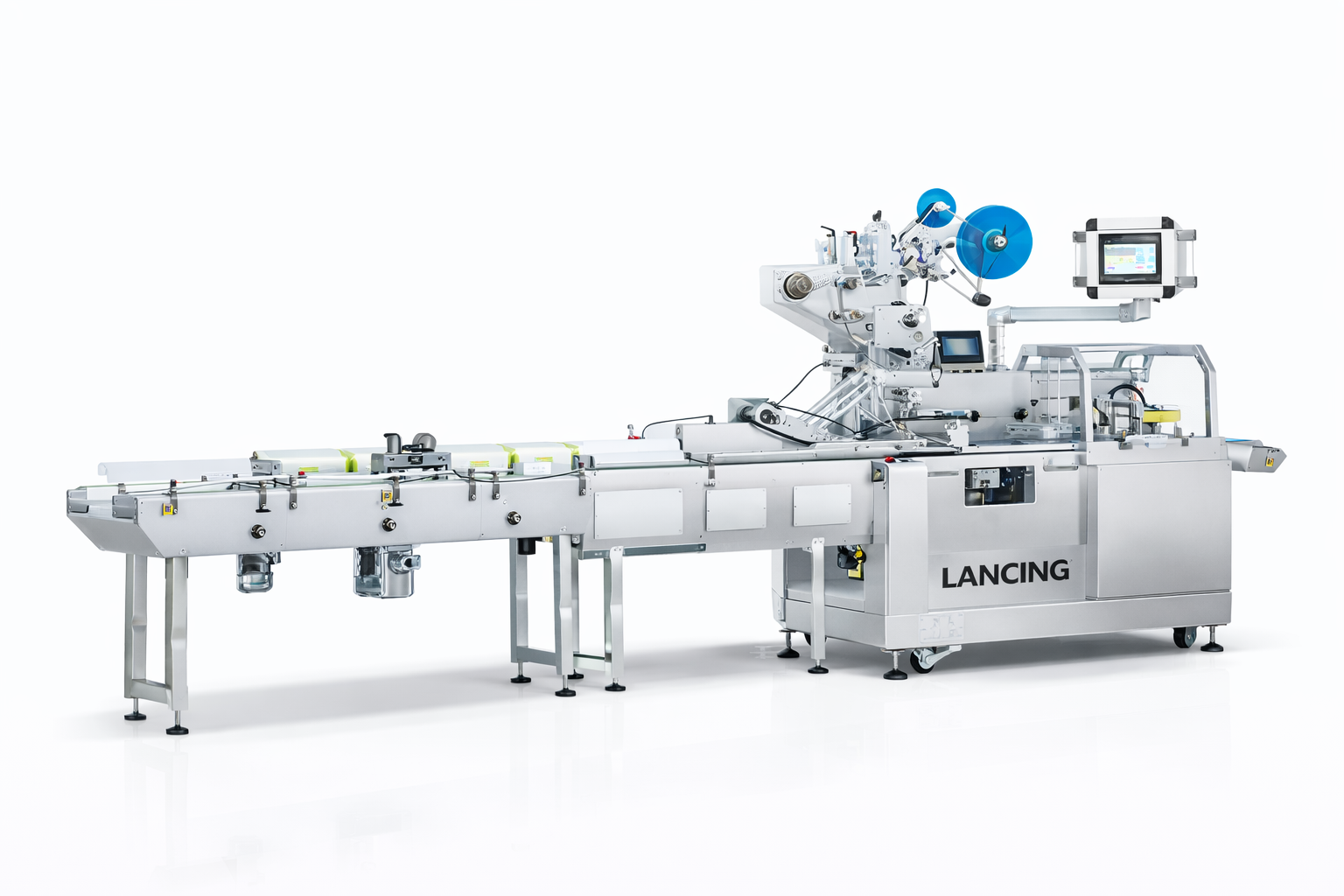
Wet-wipe production places additional demands on material handling, dosing, hygiene and barrier performance.
The LU-WP550A listing combines wet-wipe making and flexible-pack sealing in one line. The format range covers folded tissue products for baby care, flushable applications, vehicle cleaning and industrial use.
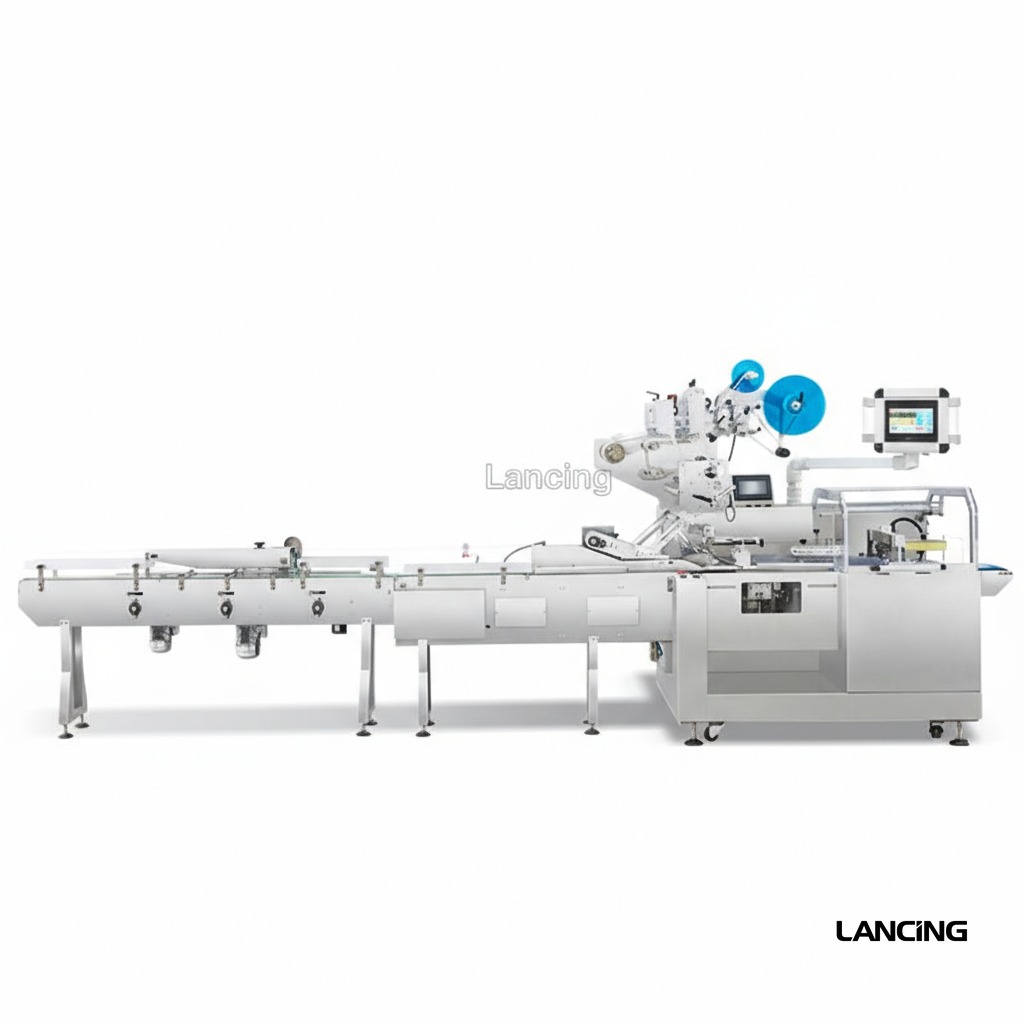
Confirm all dimensions and utilities against the selected wipe count, fold, liquid and pack construction.
| Power supply | 220 V, 50 Hz |
|---|---|
| Installed power | 40 kW |
| Reference output | 30–80 packs per minute |
| Unfolded wipe width | 150–250 mm |
| Unfolded wipe length | 150–230 mm |
| Folded wipe width | 150–230 mm |
| Folded wipe height | 90–120 mm |
| Package width | 20–120 mm |
| Package length | 150–450 mm |
| Package height | 12 mm published machine data—confirm the applicable range for your format |
| Listed materials | PE, OPP, PET-paper film and aluminised/composite films |
| Approximate dimensions | 5400 × 1170 × 1830 mm |
| Approximate machine weight | 1500 kg |
The published machine data gives a package height of 12 mm. Confirm the workable height range in writing for your wipe count, fold, lotion loading and finished pack format. Ask about LU-WP550A pack-height suitability.
Review the machine layout, product path and access points before discussing the final line configuration.
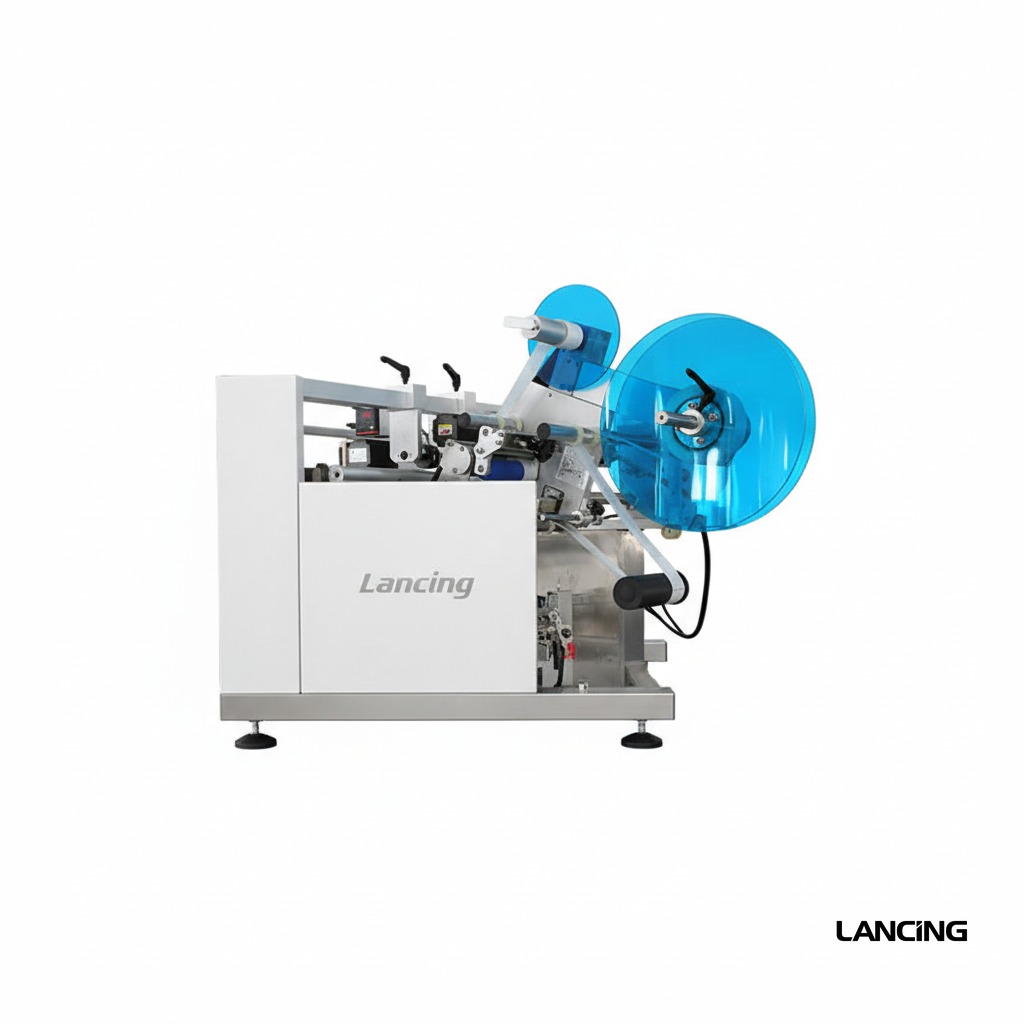
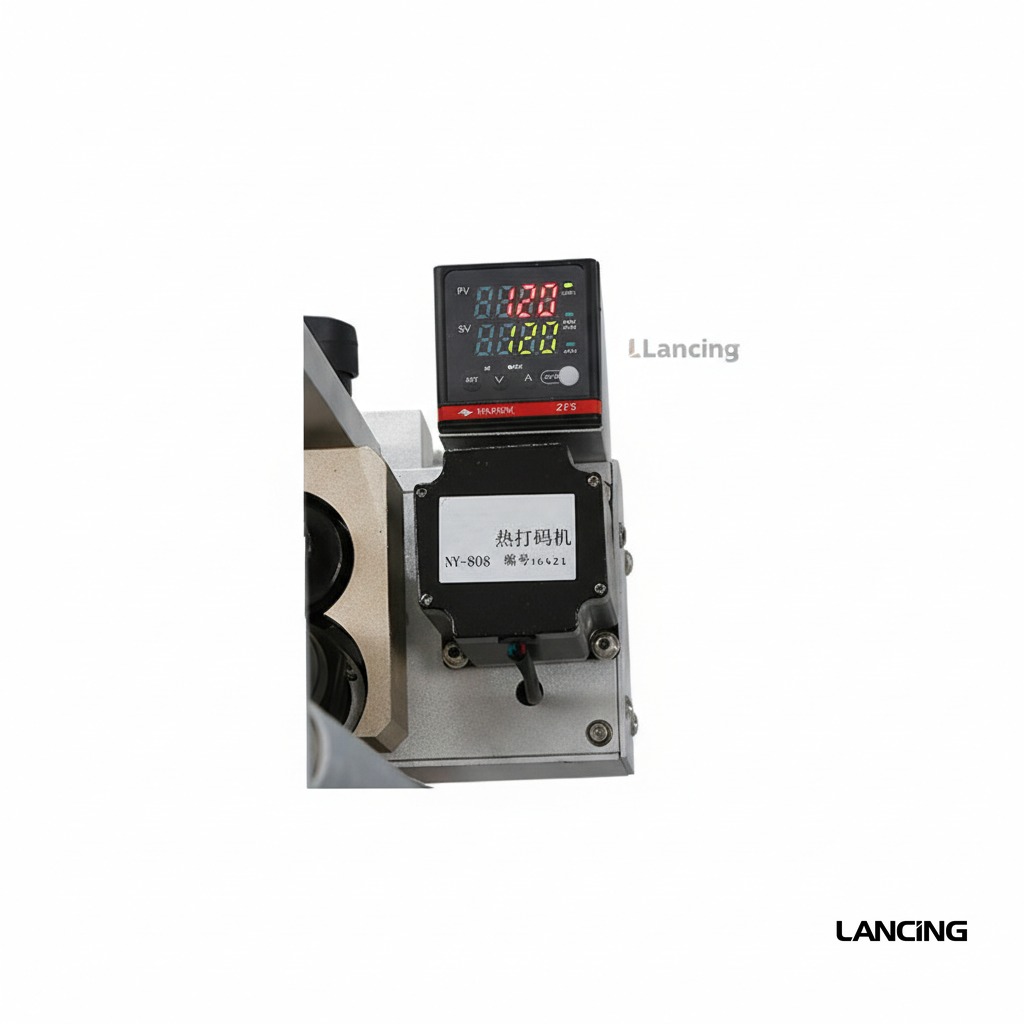
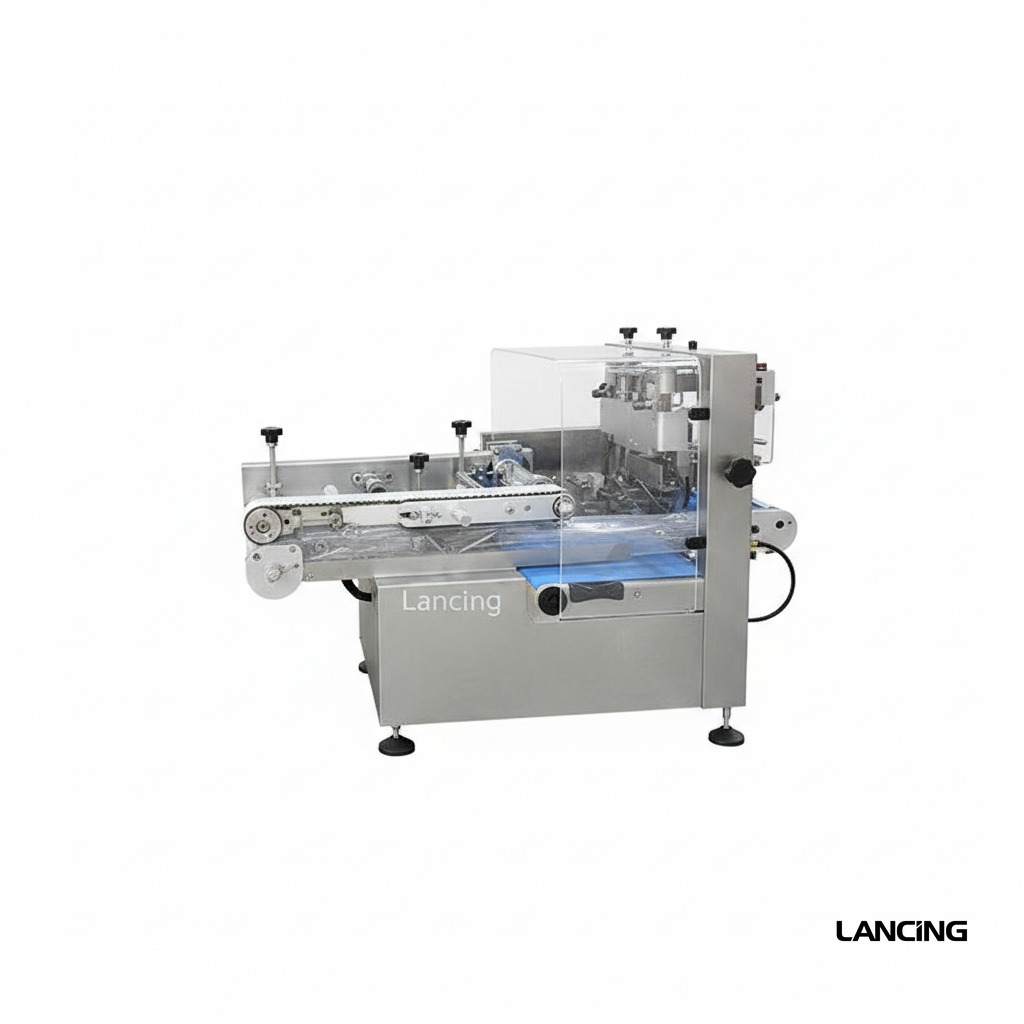
A complete specification should cover both the converted wipe and the finished pack.
Substrate, basis weight, unfolded size, fold pattern, wipe count and dry-stack behaviour.
Lotion composition, dose, contact materials, cleaning method and production-environment requirements.
Film structure, sealant layer, moisture retention, label or lid format, coding and shelf-life target.
The published applications include baby wipes, flushable toilet tissues, car-cleaning wipes and industrial wet tissues. Final liquid, tissue and film compatibility must be reviewed for each product.
The published machine data states 30–80 packs per minute. Wipe count, folded dimensions, liquid dosing, pack length, sealing behaviour and downstream handling affect the sustainable rate.
The published machine data names PE, OPP, PET-paper film and aluminised or composite structures. Your packaging-film supplier should confirm barrier, sealant and migration requirements for the intended wipe formulation.
Trials or documented validation are strongly advisable because tissue behaviour, lotion loading, pack barrier and seal contamination can materially affect production.
The published 30–80 packs/min range is meaningful only when the tissue, fold, wipe count, lotion loading, film and finished-pack dimensions are defined together. A change to one input can alter stack height, seal cleanliness, pack tension and sustainable output.
Record substrate type, basis weight, fibre direction where relevant, unfolded dimensions, fold pattern and dry-stack stability. Variability at the folding stage can move directly into pack height and end-seal presentation.
Provide the formulation or handling information required for material compatibility, the target dose, acceptable dose tolerance and the time between dosing and sealing. Excess surface liquid can affect web control and seal cleanliness.
The film structure, sealant and closure concept must support the required storage period and pack use. Barrier performance should be assessed using the complete pack, not inferred from a generic film family.
Confirm the wipe count, folded stack dimensions and finished pack length, width and height. The published 12 mm package-height value requires written confirmation for the actual format.
Define product-contact materials, cleaning agents, cleaning frequency, access, drainage or containment needs and the production-environment requirements that apply to the project.
State whether the pack needs a reseal label or lid, batch or date coding, print registration and inspection. The position and application sequence should be included in the line layout and controls scope.
Use representative tissue, liquid and film, then record the results against the approved finished pack and an agreed production run.
| Area | Trial input | Check during the run |
|---|---|---|
| Tissue conversion | Production substrate, full dimensional range, fold pattern and wipe count. | Fold repeatability, edge alignment, stack stability and absence of tearing or uncontrolled stretching. |
| Liquid application | Representative lotion, target dose, temperature and any mixing or recirculation requirements. | Dose consistency, wet-out, drips, contamination control and material compatibility. |
| Film and seals | Production film construction, reel data, sealant side, print repeat and closure components. | Tracking, seal continuity, code and artwork position, pack leaks and trapped liquid in the seal area. |
| Finished pack | Approved pack dimensions, appearance, opening and reseal requirement. | Pack height, squareness, wipe placement, opening function and presentation after handling. |
| Sustained output | Required good packs per minute and timed run duration. | Good output, reject causes, stops, recovery and the effect of replenishing tissue, liquid and film. |
| Cleaning and changeover | Defined cleaning method and format-change sequence. | Access, retained liquid, change parts, recorded settings and safe return to production. |
The quotation should state what supplies tissue and liquid, where film and labels are loaded, how finished packs are inspected and how rejected or stopped product is handled.
Define tissue roll or sheet presentation, liquid supply, filtration or mixing responsibility, film reel handling and label or lid replenishment.
Confirm electrical supply, compressed air where required, liquid services, ambient conditions, access and any hygiene zoning that affects the machine layout.
Plan discharge conveying, code verification, checkweighing, leak or vision inspection, accumulation and case packing without damaging soft packs.
Provide representative production tissue, the intended lotion or an agreed safe trial equivalent, production film, any reseal label or lid, approved pack samples and enough material for setup, adjustment and a sustained run.
Lotion changes the weight, compression, surface condition and height of the folded wipe stack. It can also reach the seal area or affect material handling, so dose and wet-out time must be included when pack dimensions and sealing are tested.
Check fold consistency, dose, stack position, pack dimensions, artwork and code position, seal continuity, leakage, opening and reseal function, appearance after handling, good output and recovery after planned stops.
A finished pack can look acceptable while variation is building in the tissue fold, liquid dose or seal area. Release the LU-WP550A process from incoming materials through conversion, wetting, wrapping and downstream handling, using the same defined materials at each stage.
| Stage | What to establish | What to record |
|---|---|---|
| Dry tissue conversion | Substrate runs without uncontrolled stretch, tearing or fold drift across the intended wipe range. | Material identification, roll or sheet presentation, fold settings, cut dimensions and dry-stack samples. |
| Liquid application | The agreed formulation or safe trial equivalent is delivered under representative handling conditions. | Recipe reference, target dose and tolerance, supply condition, replenishment method, wet-out time and observed drips or carryover. |
| Stack presentation | Folded and wetted wipes remain within the pack envelope and reach the sealing section consistently. | Wipe count, stack dimensions, position, compression and the difficult high and low conditions tested. |
| Film forming and seals | Production film tracks and seals while liquid and tissue remain outside the sealing area. | Film and reel reference, registration settings, seal parameters, pack dimensions, appearance and the customer’s agreed integrity checks. |
| Stops and replenishment | The line handles planned stops, tissue or film changes and liquid replenishment without uncontrolled product disposition. | Stop condition, retained material, restart checks, first accepted pack and any material removed before release. |
| Changeover and cleaning | The agreed format and cleaning sequence can be completed with access to the areas that require attention. | Change parts, settings, tools, cleaning method, release checks and safe return to the approved recipe. |
| Finished-pack handling | Soft packs remain acceptable through coding, inspection, accumulation and case packing. | Pack samples before and after downstream handling, reject results and any agreed storage or moisture-retention assessment. |
Wet-wipes performance is a combined result. A material change that appears small can alter fold height, compression, web handling, seal contamination or moisture retention, so the machine recipe should identify the material versions used to establish it.
Record tissue or substrate grade, relevant dimensions, lotion formulation reference, film construction, sealant side, reel data and any reseal label or lid. Use supplier data and batch references available to the project.
Link fold, dose, pack length, registration, sealing and downstream settings to the approved material combination. Mark assumptions clearly when a final production material has not yet been supplied.
Keep approved samples or photographs and the results required by the customer’s pack specification. Repeat the defined checks after a changeover, material substitution or significant stop.
The listed machine data gives a 12 mm package height. The workable height range must be confirmed in writing against wipe count, folded stack, lotion loading, film and finished-pack requirement before the format is approved.
Liquid changes stack weight, compression, surface condition and handling. It can also reach the film or seal area. The final trial therefore needs the intended lotion or an agreed safe equivalent under representative dosing and wet-out conditions.
Record the formulation or version reference available to the project, target dose and tolerance, temperature or supply condition where relevant, wet-out time, contact-material review, cleaning implications and the pack checks that must be repeated.
Measure the folded and wetted stack across the normal wipe-count and dose range, then trial the production film and required closure format. Confirm the acceptable finished height and machine range in writing rather than relying only on the published 12 mm value.
Follow the agreed product-disposition and cleaning method, then check tissue presentation, dose, film tracking, seal cleanliness, pack dimensions, code or label position and the first accepted packs before routine production resumes.
A wet-wipes project combines tissue conversion, liquid application and flexible-pack sealing. The acceptance plan should therefore connect incoming materials, hygiene and cleaning tasks, line utilities, retained pack evidence and the controls used after a product or supplier change.
Use representative dry and wetted tissue, lotion and production film to define good-pack and process evidence.
Plan FAT and SATConfirm access, utilities, environmental conditions, material storage, discharge and adjacent equipment.
Installation checklistControl cleaning, recipe changes, incoming material identity, first-off approval and parts records.
Maintenance guideAssess the complete integrated line, including routine access for threading, liquid handling, cleaning and fault recovery.
UK safety planningA change to tissue, lotion, film, wipe count or pack size can alter folding, dosing, sealability and finished-pack behaviour. Record the approved combination and define the checks required after change.
Share your product, pack size, film and target output for a practical machine recommendation.