Tell us what you need to pack — call 01494 623015 for practical machine advice
Flow-wrapping machine range

Compare horizontal flow-wrapping machines

Compare the formats, speeds and applications below, then send your product and film details so Lancing can check which platform is the better fit.

Machine selection supportHorizontal flow-wrapping machinery
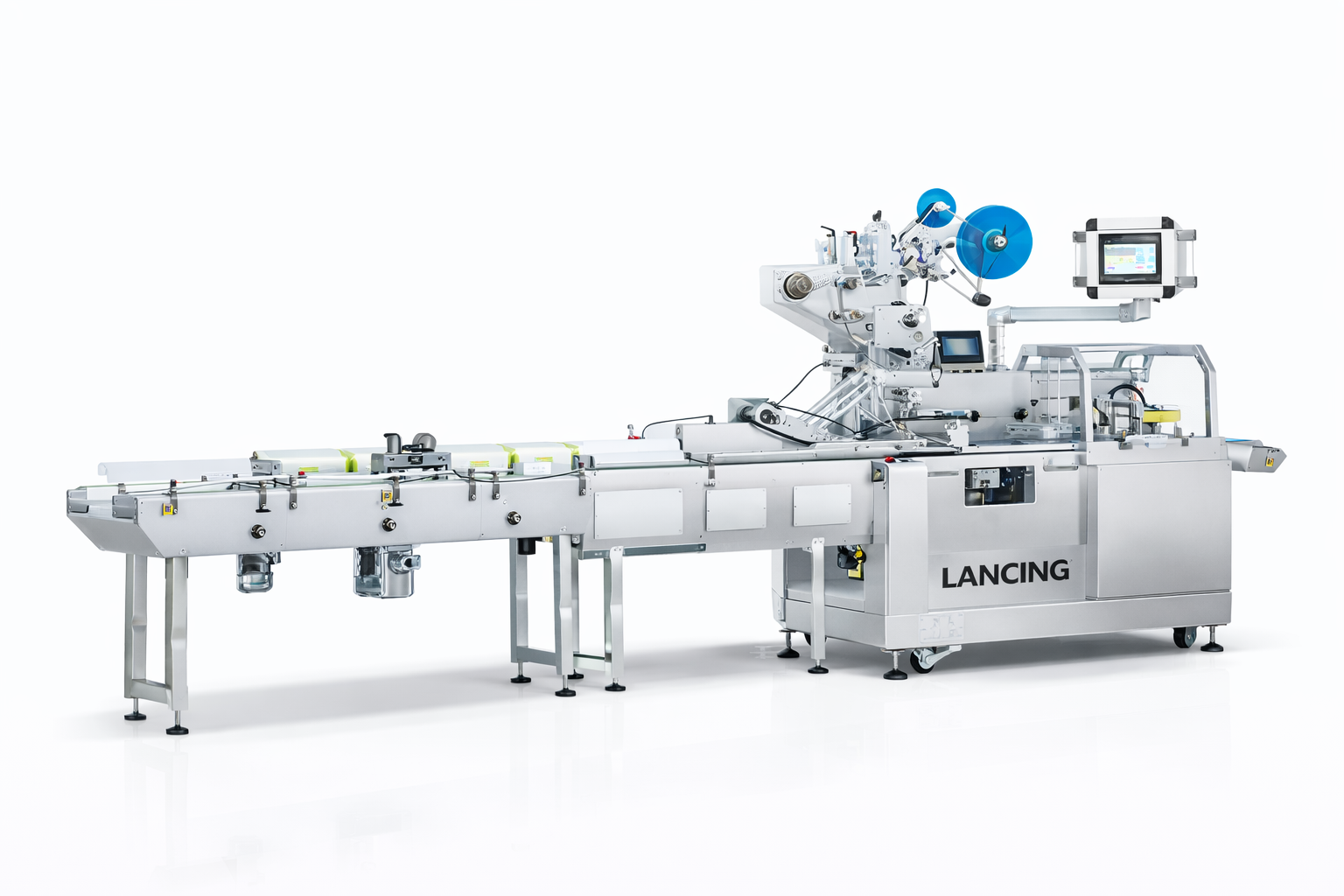
LUZB350X horizontal flow wrapper
General purposePillow packs

LUZB350X

For regularly presented food, consumer and industrial products. The machine forms a centre longitudinal seal with transverse end seals for a conventional pillow pack.

30–120bags/min
350 mmmax film width
55 mmmax product height
See sizes, speeds and options
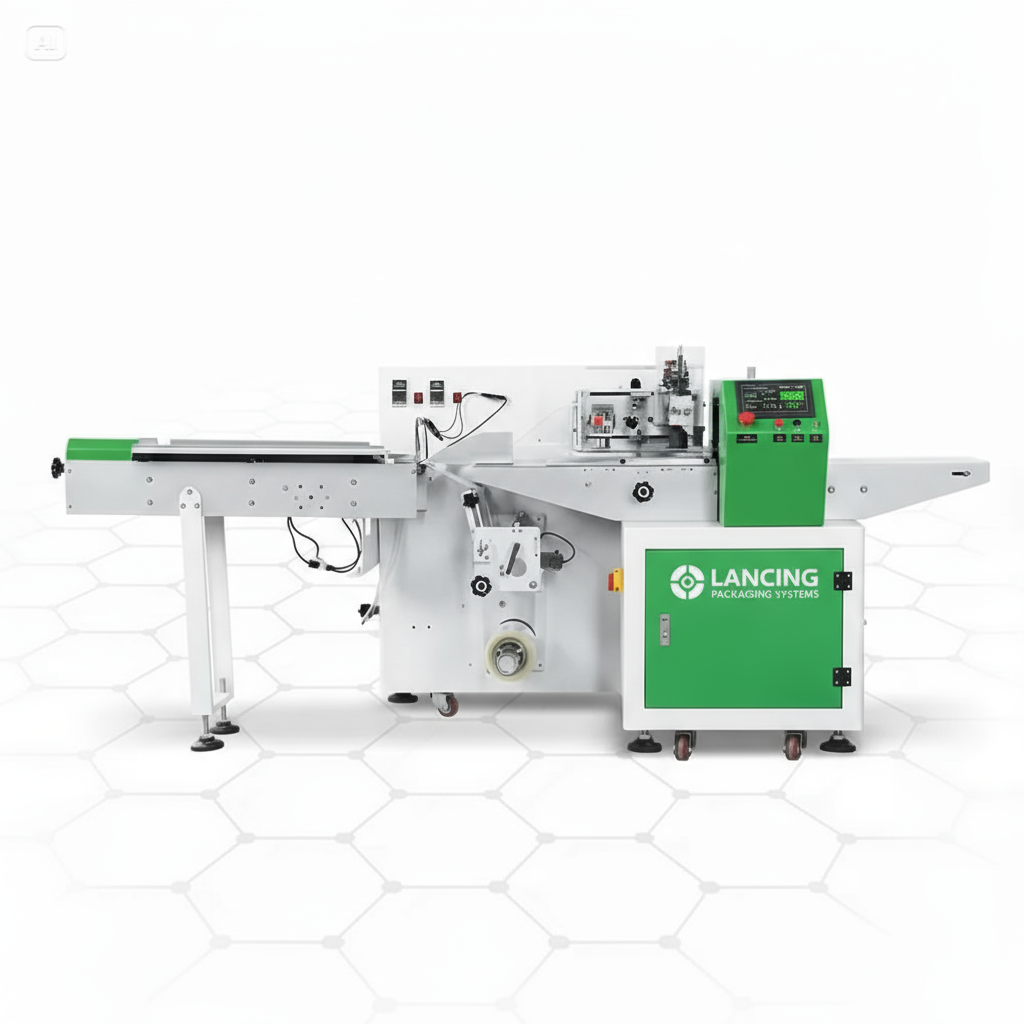
LU-WP550A wet-wipes flow wrapping line
Dedicated lineWet wipes

LU-WP550A

For folded and wetted tissue products sealed in brick-style flexible packs, including baby wipes, flushable tissues and cleaning wipes.

30–80packs/min
40 kWlisted power
5.4 mapprox. length
See sizes, speeds and options
At-a-glance selection

Which platform fits the application?

The two machines solve different packaging tasks and should not be treated as interchangeable.

Machine comparison
Selection pointLUZB350XLU-WP550A
Primary dutyHorizontal wrapping of discrete products or controlled groupsWet-wipe making, folding, wetting and sealed pack production
Reference speed30–120 bags/min30–80 packs/min
Product examplesBiscuits, bars, confectionery, soap, kits, sponges, filters, componentsBaby wipes, flushable tissues, vehicle-care and industrial wipes
Film examplesOPP, OPP/CPP, KOP/CPP, aluminium film, bubble wrapPE, OPP, PET-paper film and composite or aluminised structures
Typical project focusInfeed, print registration, jaw timing, coding and line speedWipe dimensions, folding, liquid process, pack barrier and hygiene design

Machine figures are reference values. Product trials and a formal quotation will confirm the final configuration, achievable sustained rate and utility requirements.

A

Unsure which machine?

Start with product dimensions, pack style, material and sustained output.

Use the buyer’s guide
Selection logic

Compare the complete packaging duty, not only the model name

The LUZB350X and LU-WP550A solve different production tasks. One wraps discrete products presented to a horizontal infeed; the other combines tissue conversion, liquid application and flexible-pack sealing for wet wipes.

Questions to resolve before choosing a platform
Decision pointGeneral horizontal wrapperDedicated wet-wipes line
Product entering the machineIndividual product or stable group with controlled orientation and spacing.Tissue web or prepared wipe material that must be folded, dosed and presented to the pack section.
Primary trial riskProduct pitch, former fit, printed-film registration and keeping the seal area clear.Tissue behaviour, fold consistency, lotion control, barrier film and finished-pack integrity.
Output comparisonAssess the published 30–120 bags/min range against pack length, infeed and sealing conditions.Assess the published 30–80 packs/min range against wipe count, fold, dosing and pack format.
Changeover scopeProduct guides, infeed pitch, former, film reel, print settings, bag length and jaw timing.Tissue dimensions, folding settings, liquid recipe, pack dimensions, film and any lid or label format.
Evidence requiredProduct samples, production film, approved pack, sustained-rate target and interface details.Tissue, lotion information, film, finished-pack target, hygiene method and sustained-rate target.
Options and interfaces

Define the features that affect the finished pack

Options should be linked to a clear requirement and acceptance check. This prevents a proposal from including generic extras without defining how they will work with the product and film.

Infeed and product spacing

Manual loading, flighted conveyors, pushers, collators, carriers or automatic feeding can all change the achievable output. Confirm how product arrives and how incorrect spacing is detected or recovered.

Registration and coding

Printed film needs a suitable registration mark, repeat length and print-to-cut tolerance. Coding must be positioned where the web is supported and where the code remains visible after the fin and end seals are formed.

Gas flush or modified atmosphere

When a modified atmosphere is required, define the gas, target residual oxygen method, product exposure, film barrier and validation approach. It should be quoted and trialled as a project-specific requirement rather than assumed as a standard feature.

Seal and jaw format

Fin-seal position, end-seal width, crimp pattern, cutting method and any easy-open feature should be agreed against an approved pack sample or drawing.

Inspection and rejection

Decide whether the line needs print verification, code checks, checkweighing, metal detection, seal inspection or reject confirmation, and where each device sits in the product flow.

Changeover evidence

List every format part and setting that changes. A repeatable changeover should include recorded settings, tool identification, safe access and an agreed first-off pack approval routine.

Flow-pack terminology

Match the machine description to the product path

Flow wrapping machine, horizontal flow wrapper, automatic flow pack machine and pillow pack machine are often used for the same horizontal form-fill-seal principle. The useful distinction is not the label alone; it is where the product enters the project, how it is spaced and which operations are included in the quoted automation.

Common flow-wrapping terms and the scope to confirm
Term used in an enquiryWhat it normally describesWhat the proposal should make clear
Horizontal flow wrapperA discrete product or controlled group travels horizontally while film is formed around it and sealed.Product presentation, infeed pitch, film path, longitudinal-seal position, end-seal clearance and discharge.
Automatic flow pack machineThe film feed, bag-length control, sealing and cutting cycle operate automatically once suitable product is presented.Whether product loading is manual, semi-automatic or fully automatic, plus the response to missing, doubled or rotated product.
Pillow pack machineThe finished pack has one longitudinal seal and two transverse end seals around the product.Finished bag length and width, fin-seal position, end-seal width, print-to-cut position and approved pack appearance.
Wet wipes packing machineA dedicated process combining tissue handling, folding, liquid application and flexible-pack sealing.Tissue and fold range, lotion process, finished stack, barrier film, closure components, cleaning and acceptance method.
Compare like with like

Use the same definition of automatic in every quotation

A wrapper can cycle automatically while still relying on an operator to place each product. A different proposal may include product feeding, spacing, inspection and downstream control. Both can be valid, but they are not the same production scope.

Product supply

Define where the supplier’s responsibility begins. State whether product arrives one at a time, in rows, randomly, from an oven or process conveyor, or as a counted group. Include normal gaps, surges and rejected product.

Wrapping cycle

Confirm the film reel, former, registration control, longitudinal seal, crimp jaws, cutter, code position and recipe settings that are included for each pack format.

Line recovery

Describe what happens after starvation, a blocked discharge, a registration fault or an incorrect product. The acceptable result is controlled recovery to good packs, not only an alarm message.

Choose the page that owns the requirement

Review the LUZB350X horizontal flow wrapper for discrete products, the LU-WP550A wet-wipes line for tissue conversion and wet packing, or use the flow-wrapper buyer’s guide to normalise competing quotations.

Is a pillow pack machine the same as a horizontal flow wrapper?

Pillow pack describes the usual finished pack style, while horizontal flow wrapper describes the process and machine arrangement. A horizontal wrapper commonly produces a pillow pack with one longitudinal seal and two end seals, subject to the selected film and machine configuration.

What does automatic mean on a flow-pack quotation?

It should state which tasks are automatic: product feeding, spacing, film registration, sealing, cutting, coding, inspection, rejection and line-speed control. Do not assume that an automatic wrapping cycle includes automatic loading or collating.

Can a horizontal flow wrapper be hand loaded?

It can be considered where an operator can present products safely and consistently at the required pitch. The sustained rate, staffing, access and handling risk should be assessed with the real product rather than inferred from the wrapper’s maximum cycle range.

When is the wet-wipes platform the right comparison?

Use the dedicated wet-wipes route when the project includes tissue conversion or presentation, liquid application and sealing of the wetted stack. A general horizontal wrapper is not a substitute for those upstream wet-wipe processes.

Compare more than a model number

Architecture choices can change the correct machine family

Before treating two automatic flow wrappers as equivalent, define how the product is supported, how it is fed and how the transverse seal is made. These decisions can affect handling, film choice, pack appearance, changeover and the evidence needed at trial.

Feeding system

Manual flighted loading, metering, collating and automatic feeding place different duties on the wider line.

Compare feeding systems

Film-reel position

Top-reel and inverted arrangements support and transfer difficult products differently.

Top-reel vs inverted

Sealing-jaw motion

Rotary and box-motion jaws provide different contact and clearance characteristics.

Compare jaw motion

Complete project cost

Compare feeding, film, options, integration, testing and support as well as the base machine.

What changes the quote

Architecture guides are not model-option lists

Confirm in writing which configurations are available on the proposed Lancing machine and prove the selected arrangement with representative product and film.

Translate the machine name into a pack duty

Pillow pack machine, flow pack machine and horizontal flow wrapper are not complete specifications

The terms often point to the same horizontal form-fill-seal principle, but they do not define product loading, film path, longitudinal-seal position, end-seal motion, coding, inspection or the wider line boundary.

Check the dimensional range

Use product and finished-pack measurements to screen the published machine envelope before committing film or format parts.

Check film width and pack size

Define the operating model

Short runs and changing customer formats place more emphasis on changeover control and release evidence than one stable factory format.

Guide for contract packers
Compare the complete architecture

Separate machine model, packaging process and product-handling scope

A model comparison is useful only after the product path, sealing duty and infeed responsibility have been defined.

HFFS or VFFS

Confirm whether the product travels horizontally as a discrete item or is dosed downwards into a vertically formed bag.

Process comparison

Seal qualification

Specify the production film and accepted seal before temperature or output is treated as fixed.

Sealing-window guide

Multipack collation

Define how products are counted, grouped and stabilised before they enter the wrapper.

Multipack infeed guide

Ready to discuss your product?

Share your product, pack size, film and target output for a practical machine recommendation.