Tell us what you need to pack — call 01494 623015 for practical machine advice
Flow wrapping for your product

Choose the flow wrapper that fits your product

Tell us what you pack, your finished bag size, film and target output. Lancing will help you select the right machine and plan the infeed.

40+ yearspackaging machinery experience
Application-ledmachine selection around your product
UK-basedsales and technical support
Complete lineinfeed-to-discharge project support
Your product comes first

Get a machine recommendation based on the pack you need

A useful recommendation starts with your real product, finished pack, film and sustained output—not the highest number in a brochure.

Share samples, dimensions and line information with Lancing. We will use them to check product feeding, film handling, seal performance, coding, controls and discharge before recommending the next step.

  • Check your product and pack before committing
  • Confirm printed-film registration and coding
  • Plan feeders, conveyors and line controls
  • Prepare installation, commissioning and operator training
Flow-wrapping machinery category image from Lancing UK
Machine range

Compare the machine types against your application

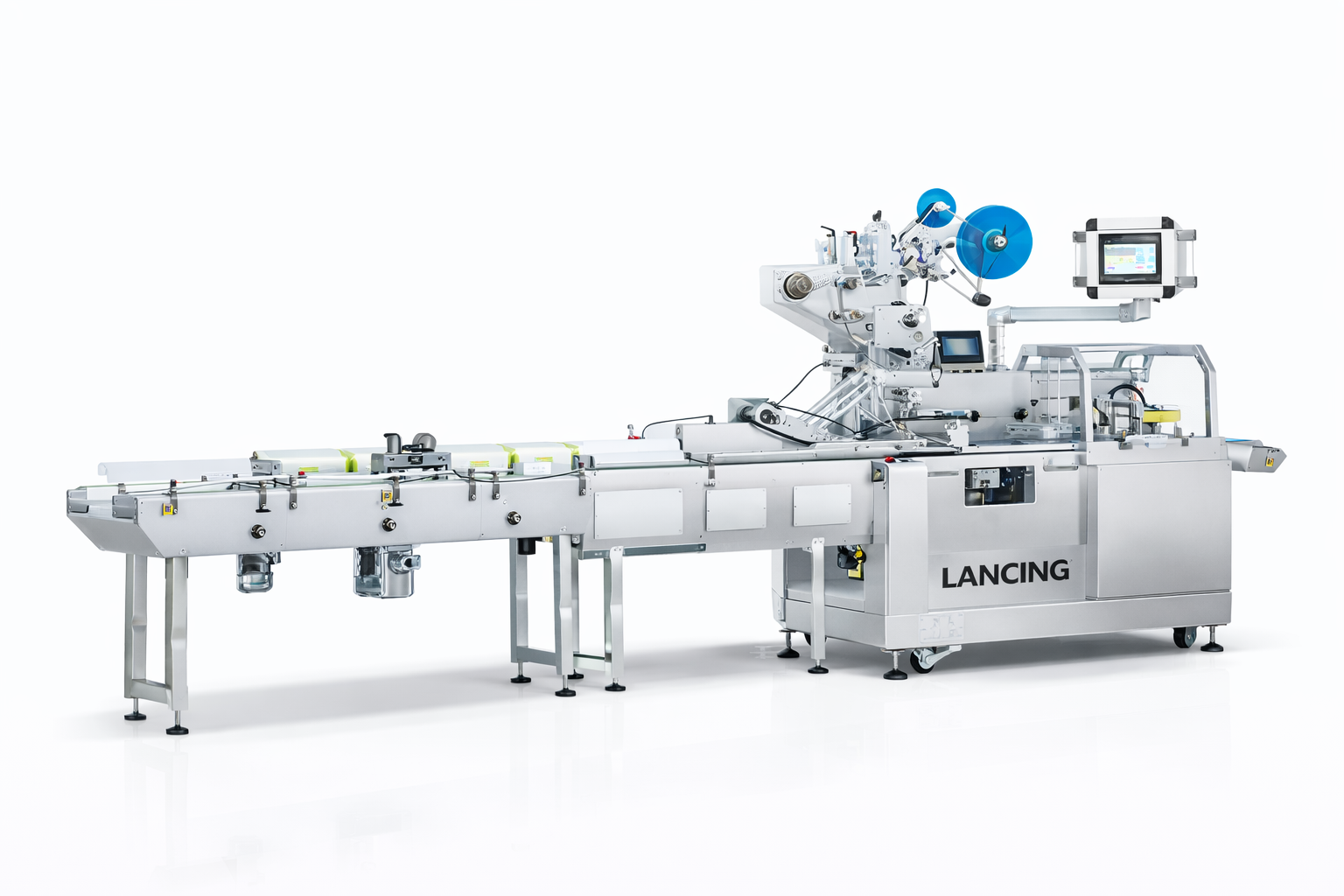
Compare a general-purpose horizontal wrapper for individual products and multipacks with a dedicated wet-wipes making and sealing line.

Horizontal flow-wrapping machine category
30–120 bags/minUp to 350 mm film

LUZB350X horizontal flow wrapper

A flexible platform for biscuits, snack bars, confectionery, soap, kits, sponges, filters and small components.

  • PLC and touchscreen control
  • Photoelectric print registration
  • Independent heat zones
Review the LUZB350X
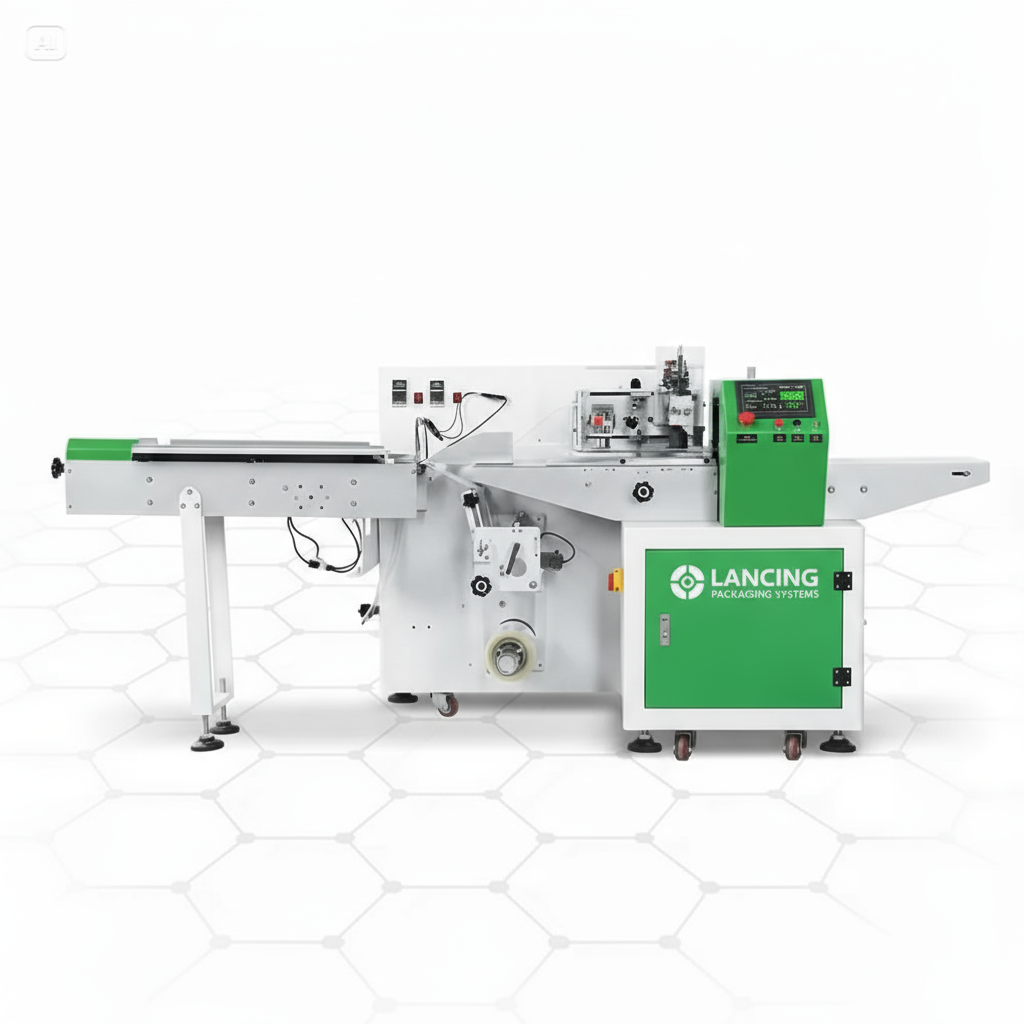
LU-WP550A automatic wet-wipes making and sealing machine
30–80 packs/minWet-wipes line

LU-WP550A wet-wipes flow wrapper

A dedicated making, dosing and brick-pack sealing system for baby wipes, flushable tissues, vehicle-care wipes and industrial wet tissues.

  • Wipe folding and pack sealing
  • Composite-film compatibility
  • Dedicated wet-wipe format range
Review the LU-WP550A
Applications

Choose around the way your product is presented

Your product shape, stability, feeding method and finished-pack requirement decide which flow-wrapping approach will work best.

01

Food and bakery

Biscuits, cookies, snack bars, confectionery and other consistently fed products.

Food applications
02

Consumer goods

Soap, cosmetic kits, sponges and household products requiring a neat pillow pack.

Non-food applications
03

Industrial products

Filters, small tools, components and grouped items with controlled infeed and discharge.

Industrial applications
04

Wet wipes

Dedicated folding, wetting and sealed brick-pack production for tissue-based products.

Wet-wipes machine
How we help you choose

A clear route from first enquiry to production

We turn your product, pack and output requirements into a practical machine and line plan.

Show us the product

Provide minimum and maximum dimensions, weight, orientation, surface condition and representative samples.

Define the finished pack

Confirm the bag size, seal style, clear or printed film, barrier needs and any coding requirement.

Agree a usable line speed

Set the sustained packs-per-minute target from real upstream production, not just a peak machine figure.

Plan the complete line

Agree feeding, transfer, inspection, rejects, guarding, controls and downstream handling before installation.

Answers before you invest

Flow-wrapper FAQs

Use these answers to prepare a stronger enquiry and compare machine proposals on the same basis.

What is a horizontal flow-wrapping machine?

A horizontal flow wrapper feeds products along a conveyor, forms a continuous reel of film around them, creates a longitudinal seal and closes each pack with transverse end seals. It is commonly used for regular products that can be presented in a controlled orientation.

Which products can be flow wrapped?

Typical applications include biscuits, snack bars, confectionery, bakery products, soap, sponges, filters, small components, kits and wet-wipe packs. Product dimensions, stability, film choice and required seal integrity determine the final machine specification.

How fast can a flow wrapper run?

The LUZB350X listed machine speed range is 30–120 bags per minute. The LU-WP550A wet-wipes line is listed at 30–80 packs per minute. Achievable production speed depends on the product, film, pack length, infeed arrangement and upstream process.

Can a flow wrapper be connected to existing machinery?

Yes. Lancing can assess product transfer, infeed timing, guarding, coding, inspection, discharge and communications so the wrapper can operate as part of a wider packaging line.

Get a recommendation for your product

Tell us what you need to wrap

Share the basics below and Lancing will help you narrow down the machine, film checks and next steps.

01494 623015 sales@lancinguk.com
Unit 5A Jefferson Way
Thame, Oxfordshire
OX9 3SZ
Or call 01494 623015

Protected by server-side anti-spam checks. Your details are used only to answer your enquiry. Privacy notice.

Plan around real production

Turn a flow-wrapping requirement into a machine brief

A useful quotation starts with the product, film, finished pack and sustained output. The machine then has to feed, register, seal and discharge that combination consistently rather than simply reach a catalogue speed.

01

Control the product pitch

Record the minimum, nominal and maximum product dimensions, then define the gap between products at the sealing jaws. Products that roll, bounce, deform, stick together or arrive randomly may need guides, flights, carriers, collating or an automatic infeed.

02

Prove the film and seals

Supply the complete film construction, reel data, unwind direction and print-mark details. Seal quality depends on the sealant layer, temperature window, pressure, dwell time, jaw condition and keeping product or contamination out of the seal area.

03

Define usable output

State the good packs per minute required over a timed run. Include normal product variation, film changes, code checks, rejects and brief upstream or downstream stops so proposals are compared against a production target rather than an isolated peak.

Product-trial inputs

What to send before a flow-wrapper trial or specification review

Representative information reduces uncertainty and helps Lancing identify whether a standard horizontal flow wrapper, a dedicated wet-wipes line or a different packaging process is the correct route.

Flow-wrapper trial and quotation checklist
InputWhat to provideWhat it helps confirm
Product samplesNormal production samples covering the smallest, largest and most difficult variants, with dimensions and weight.Infeed method, guides, pitch, sealing-jaw clearance and product handling.
Finished packAn approved sample or drawing showing bag length, bag width, seal position, end-seal appearance and coding area.Former size, crimp-jaw format, cut position, print-to-cut requirement and pack presentation.
FilmProduction reel or representative trial reel, technical data sheet, thickness, reel width and diameter, core, unwind and registration mark.Mechanical fit, tracking, print registration and the workable sealing window.
Output conditionsRequired sustained good packs per minute, batch length, product arrival pattern and acceptable changeover time.Machine speed margin, infeed concept, buffering and acceptance-test duration.
Line interfacesConveyor heights, available footprint, upstream and downstream equipment, utilities, coding, inspection and reject requirements.Transfers, controls, guarding, access and the scope of the integrated line.
Keep the process ownership clear

When another packaging route is more suitable

This site concentrates on horizontal flow wrapping and the dedicated wet-wipes application. Related Lancing sites cover different machine processes so each requirement can be directed to the most relevant specialist content.

Vertical bag and pouch forming

Powders, granules, liquids or pastes that are dosed vertically into a bag normally belong with vertical form fill seal or sachet machinery.

Compare form fill seal machinery

Shrink presentation or multipacks

When the film must contract around a carton, tray, bottle group or retail pack, compare L-sealers, sleeve sealers and heat tunnels.

Compare shrink wrapping machinery

Complete packaging lines

Projects covering several packaging stages, common controls and end-of-line handling may need a wider line-level specification.

Plan a complete packaging line
More buyer questions

Samples and process selection

What samples should I send for a flow-wrapper trial?

Send representative production samples, not only ideal examples. Include the smallest and largest formats, normal dimensional variation, fragile or difficult products, approved finished packs and enough film for setup and a sustained run.

When is a vertical form fill seal machine more suitable than a horizontal flow wrapper?

Vertical form fill seal is usually considered when a loose product is dosed downwards into a bag, for example powders or granules. Horizontal flow wrapping is normally used when a discrete product or controlled group travels along an infeed and is enclosed in film.

Technical guidance for the next decision

Move from machine search to a controlled packaging project

Use the new guide library to compare architecture, prepare a quotation, test the product and plan reliable operation without changing the existing machine pages.

Choose how products enter the wrapper

Compare manual loading, flighted conveyors, metering belts, collators and automatic feeding around the actual arrival condition.

Flow-wrapper feeding systems

Understand what changes the quotation

Separate the base wrapper from feeding, film control, inspection, integration, acceptance and support scope.

Flow-wrapper cost factors

Diagnose and prevent pack faults

Use a safe evidence-led method for end seals, fin seals, film tracking, registration and product timing.

Troubleshooting guide

Plan trials and acceptance

Define representative products, production film, good-pack criteria, FAT, SAT and production release evidence.

Trials, FAT and SAT

Prepare the production site

Check delivery access, service space, utilities, line interfaces, materials and commissioning roles.

Installation requirements

Browse every technical guide

Find machine-architecture, maintenance, safety and project-planning resources in one place.

Technical guide library
Answer-led flow-wrapping resources

Find a direct answer before you prepare the machine brief

Use the question library for clear explanations of the wrapping process, output, product pitch, gas flushing, coding and inspection. Each guide identifies the variables Lancing needs to confirm for the real application.

Define usable output

Separate cycle rate, wrapped output and accepted good packs before a speed is used in a quotation.

Flow-wrapper speed and output
Choose by the decision you are making

Match the pack format, dimensions and operating model before comparing quotations

These focused guides cover three buyer tasks that sit between a general machine search and a verified product trial.

Is a pillow pack the right format?

Understand the longitudinal and end seals, suitable products, feeding boundary and machine architecture behind a conventional flow pack.

Pillow-pack machine guide

Will the product fit the film and machine?

Separate product dimensions, finished bag size, film width, pack length and product pitch before approving a format.

Film width and pack-size guide

Do you pack changing customer formats?

Plan recipe control, changeover evidence, customer film, coding and acceptance for a multi-client contract-packing operation.

Contract-packer flow-wrapper guide
Resolve the next packaging decision

Compare process direction, sealing window and multipack handling

These guides address three high-impact decisions that must be fixed before a machine quotation can be compared fairly.

Horizontal or vertical form fill seal?

Choose by product movement, dosing method, finished pack and the complete line rather than the acronym alone.

Compare HFFS and VFFS

What creates a reliable seal?

Connect film construction, temperature, pressure, dwell, jaw condition and production speed in one controlled trial.

Define the sealing window

How will the multipack be collated?

Specify count, orientation, group stability, infeed, inspection and recovery before the wrapper encloses the group.

Plan multipack flow wrapping

Ready to discuss your product?

Share your product, pack size, film and target output for a practical machine recommendation.