Tell us what you need to pack — call 01494 623015 for practical machine advice
Packaging-process comparison

Horizontal vs vertical form fill seal: which machine fits the product?

A horizontal flow wrapper carries a discrete product or controlled group along an infeed and forms film around it. A vertical form fill seal machine normally doses a product downwards into a bag. The better route depends on product form, how it can be presented or dosed, the required pack and the complete line—not on the acronym alone.

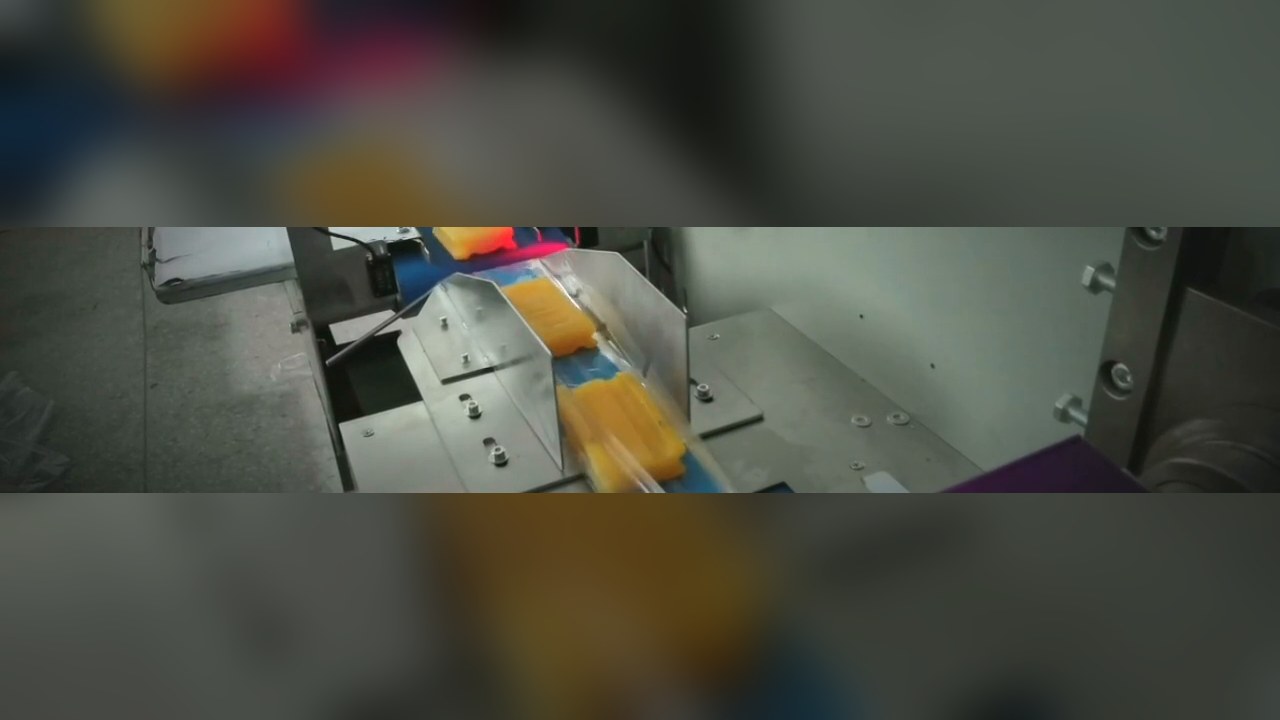
HFFS and VFFS decision guideHorizontal flow wrapping process used for comparison with vertical form fill seal

Choose by product movement and pack formation

Horizontal form fill seal (HFFS) and vertical form fill seal (VFFS) are different machine architectures. Horizontal flow wrapping is usually the stronger starting point for an individual item or controlled group that can travel along a conveyor. Vertical form fill seal is usually considered when a loose product is measured or dosed downwards into a bag. Product trials, film data, pack dimensions and line drawings are still required before either route is approved.

How horizontal flow wrapping handles the product

A horizontal flow wrapper receives products in the direction of travel, controls their pitch, folds a continuous film web around them, closes the longitudinal seam and makes transverse end seals between products. The infeed must keep the product clear of the crimp jaws and present it consistently enough for the intended pack length, registration and output.

Horizontal flow wrapping is commonly assessed for bars, biscuits, bakery products, soap, sponges, filters, components, kits and controlled multipacks. The product may be loaded manually, placed into flights, metered from an upstream conveyor or collated automatically. Automatic film wrapping does not automatically mean the product feed is fully automatic.

How vertical form fill seal handles the product

A vertical form fill seal machine forms a film tube around a vertical product path, closes the longitudinal seam and creates a lower seal before the measured product enters the bag. It then makes the top seal and cut for that pack. The product is normally supplied through a compatible filler or dosing system, such as an auger, weigher, cup or liquid pump, selected around the real material.

VFFS is therefore commonly considered for products that can be dosed reliably by gravity or a controlled filling system. Powders, granules and other loose products may fit this route better than a horizontal wrapper, but flowability, dust, product breakage, fill accuracy and seal contamination still need project-specific assessment.

Is every HFFS machine a conventional flow wrapper?

No. HFFS is a broad industry term. A conventional horizontal flow wrapper forms a film tube around a product travelling horizontally and normally produces a pillow-style pack. Some suppliers also use horizontal form fill seal terminology for premade-pouch or thermoforming systems with different pack constructions. A quotation should name the film path, pack style, filling method and seal arrangement rather than relying on the acronym alone.

Like-for-like selection

Compare the complete production duty

The table is a decision framework, not a universal machine specification. Confirm the exact model, filler, infeed, film and acceptance test proposed for the project.

Horizontal flow wrapping and vertical form fill seal decision factors
Decision pointHorizontal flow wrappingVertical form fill seal
Product presentationIndividual items or controlled groups travel along an infeed.Product is measured and introduced downwards through a dosing path.
Typical product formDiscrete, shaped, fragile or regularly presented products and collations.Loose powders, granules, pieces or liquids that suit a compatible filler.
Pack formationFilm is folded around the moving product and sealed lengthways and across the ends.Film is formed into a vertical tube, sealed at the bottom, filled and closed at the top.
Critical interfaceProduct spacing, orientation, jaw clearance and infeed recovery.Doser performance, product flow, drop behaviour and product exclusion from the seal.
Evidence to requestRepresentative product, production film, approved pack, sustained good-pack output, changeover and integrated line test.
Avoid the common selection errors

Do not decide from product name, speed or floor space alone

Product form can vary

A product described as “snacks” could be an individual bar, loose pieces, a tray or a counted group. Each may require a different architecture.

Pack style matters

Finished bag geometry, seal position, display requirement, coding and barrier objective can eliminate an otherwise plausible machine route.

Line scope changes the answer

Manual loading, automatic dosing, accumulation, inspection, rejects and downstream handling can change both the equipment and the project cost.

Use the correct specialist route without losing the flow-wrapping comparison

This website explains the horizontal flow-wrapping duty in full. For vertical dosing and bag-forming equipment, continue to the Lancing form fill seal machinery site after the product and pack route has been identified.

Questions buyers ask

HFFS and VFFS selection questions

Can one machine switch between HFFS and VFFS?

No. A conventional horizontal flow wrapper and a vertical form fill seal machine use fundamentally different film paths, product movements and supporting equipment. A factory may operate both technologies, but one wrapper does not normally change orientation and become the other process.

Which process is normally considered for powders or granules?

Vertical form fill seal is usually the first route to assess when a powder or granule can be measured by a suitable filler and delivered downwards into a bag. Flowability, dust, static, product damage, fill accuracy and contamination of the seal still need testing with the real product.

Which process is normally considered for bars, soap or individual products?

Horizontal flow wrapping is usually considered when an individual bar, soap product or other discrete item can be oriented and spaced along an infeed. The product envelope, film, longitudinal seal, end-seal clearance and loading method must then be confirmed.

Which machine uses less floor space?

There is no reliable universal answer. A vertical bagger may have a compact footprint but can require height for product dosing, while a horizontal wrapper needs linear space for the infeed and discharge. Compare project drawings that include feeders, access, guarding, inspection and downstream equipment.

Prepare one decision brief

Send the information that proves the packaging route

Provide the product form, dimensions, target pack, production film, required accepted output, available space and existing upstream and downstream equipment. Lancing can then identify whether horizontal flow wrapping, vertical form fill seal or another packaging process should be taken forward.

Ready to discuss your product?

Share your product, pack size, film and target output for a practical machine recommendation.