
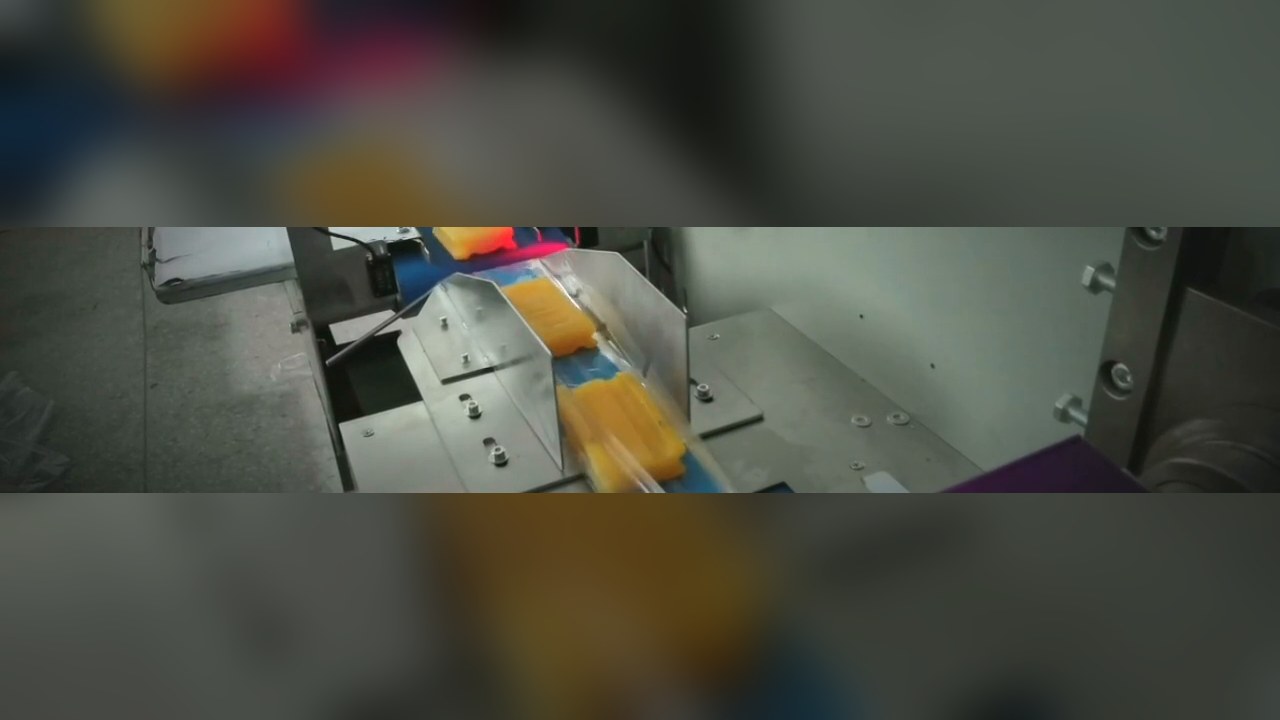
Feeding controls the product pitch before the film and jaws
Horizontal flow wrapping is a timed process. The infeed must present each product or group inside the intended bag length and clear of the transverse sealing zone. Product pitch is therefore a line-control requirement, not simply a conveyor setting.
The best infeed depends on product rigidity, surface friction, shape, orientation, arrival pattern, required output and the amount of manual handling that is acceptable. A wrapper described as automatic may still rely on people to place products into flighted pockets unless automatic feeding is included explicitly.
Common feeding methods
Manual loading into a flighted or lugged conveyor
An operator places each product between flights. The mechanical pitch is clear and flexible, making this approach useful for variable products, lower output or applications where visual judgement is valuable. Labour demand, ergonomics and missed pockets must be assessed over the intended shift.
Metering belts or inline transfer
Products arriving in a stable orientation can be accelerated, separated and phased into the wrapper. The transfer must manage touching products, gaps, speed changes and stop/restart behaviour without scuffing or damaging the product.
Collating and multipack feeding
Several items may need to be counted, stacked or grouped before they enter the film. The system should verify the group before release and define what happens to incomplete groups during a stop or fault.
Automatic feeders, robots and vision-guided handling
Random or high-output products may require orientation, pick-and-place or a purpose-built feeder. The project must define the feeder’s usable input condition, missed-pick logic, reject route, recovery method and responsibility for product accumulation.
Design for starved, blocked and imperfect conditions
A line that works only with evenly spaced ideal products is not production-ready. Define how the wrapper reacts when no product arrives, when two products touch, when a product is late, when the downstream conveyor stops and when an operator removes a damaged item. Sensors and controls should prevent empty packs or product being caught in the jaws where that function is required and verified.