
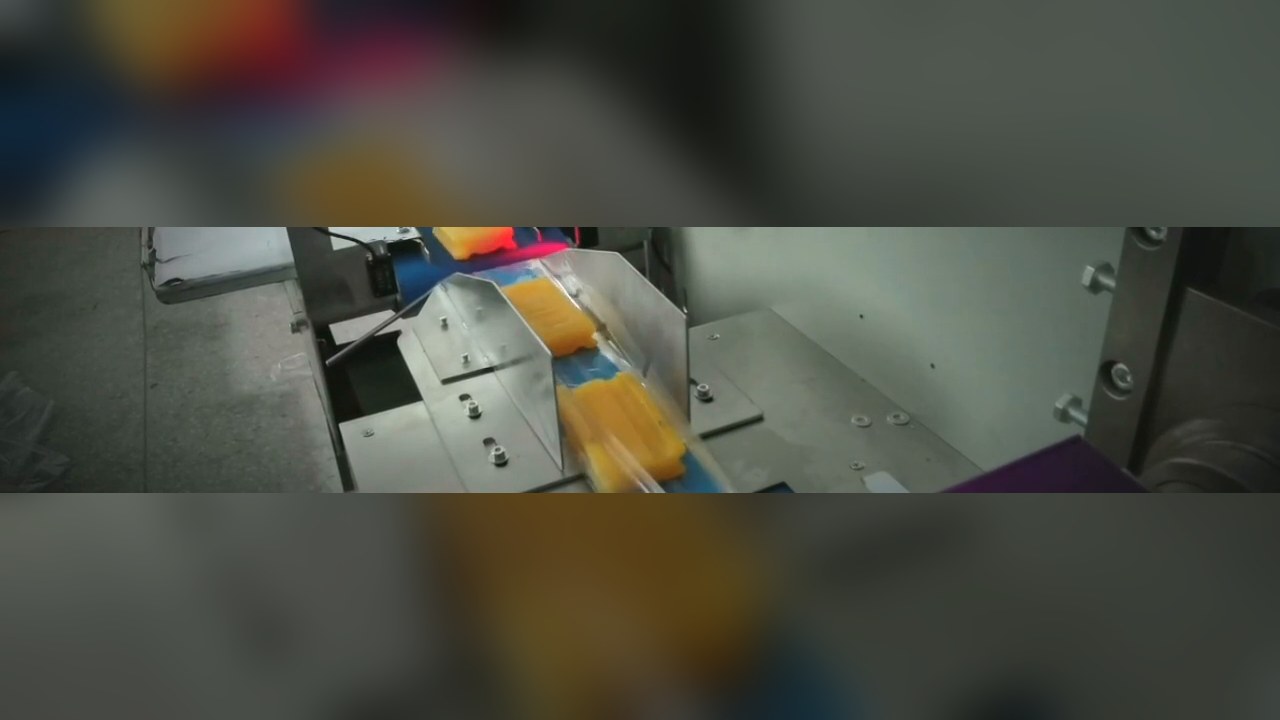
The group must be controlled before the wrapper seals it
A standard wrapper does not automatically create a reliable multipack from randomly arriving products. The line needs a defined collation—such as a row, stack, bundle or counted group—plus a transfer method that preserves count and orientation through the former and sealing jaws. The required infeed may be manual, lane-based, flighted, servo-metered, collating or robotic.
“Multipack” can also describe different duties. It may mean several loose items in one primary flow pack, several individually wrapped packs inside a secondary flow pack, or a promotional group that could alternatively be shrink wrapped, cartoned or banded. Define the finished pack and reason for grouping before selecting the process.
Common collation duties
- Side-by-side group: products are aligned into a row or matrix and transferred without changing count.
- Stacked group: items are counted and stacked, with support added if the group can collapse or telescope.
- Primary packs into a secondary flow pack: already wrapped items are accumulated and collated for a larger retail or promotional pack.
- Mixed kit: different components are assembled in a fixed sequence, often requiring presence checks and recipe control.
- Long product train: several items are placed nose-to-tail inside one longer pack, with end-seal clearance maintained.
The infeed is part of the multipack specification
The correct infeed depends on how products arrive. A manual loading station may suit small batches or frequent changes. Metering belts and flighted conveyors can control regular items. Lane mergers, stackers and collators can form repeatable groups. Robotics may be considered when product orientation, mixed formats or line balancing require flexible pick-and-place.
The scope should state what happens when a product is missing, doubled, rotated, late or damaged. The control strategy may stop the wrapper, reject the group, create an empty pitch or recover automatically. Those behaviours affect film waste, count assurance and restart performance.
Pack geometry must include the complete group
Measure the minimum, nominal and maximum group after it has been collated—not only the dimensions of one item. Allow for movement inside the group, compression, trays or boards, seal clearance, film tracking and the finished presentation. Long or unstable groups may need extra support through the former and discharge.