
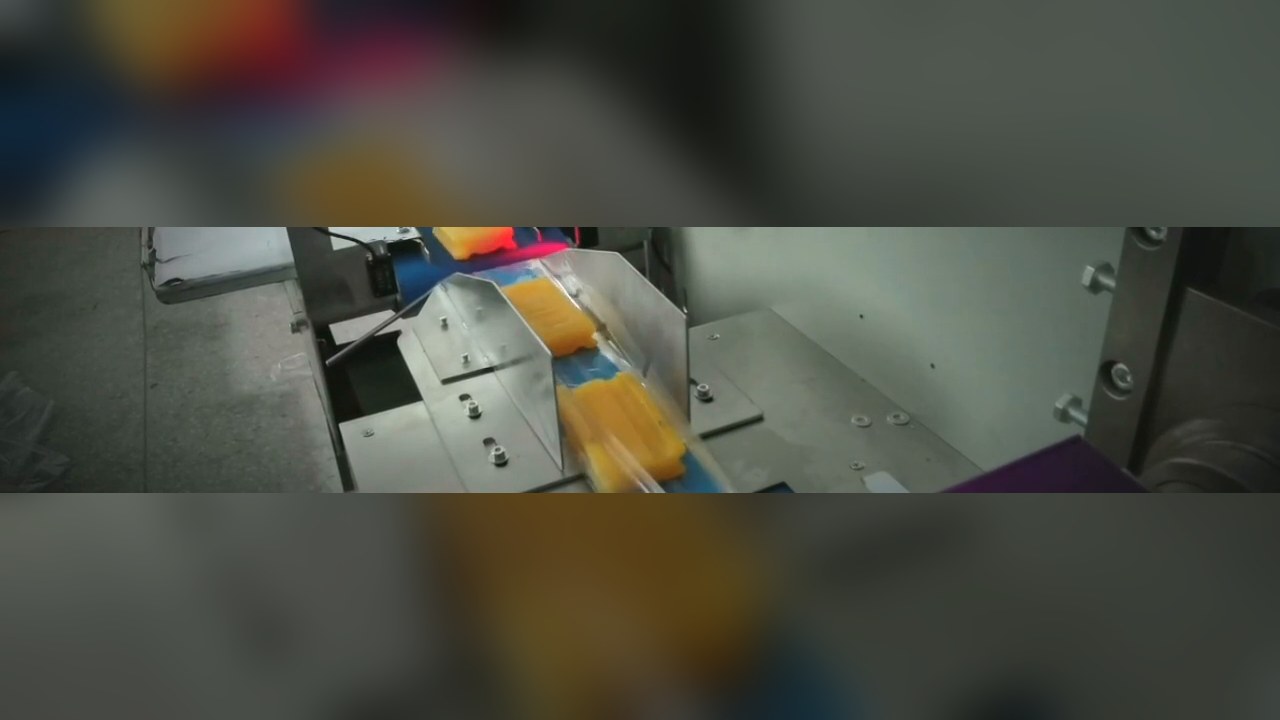
What does a pillow pack machine do?
A pillow pack machine creates a sealed flexible pack around a product travelling horizontally through the machine. Film is unwound, guided through a former, closed into a tube with a longitudinal seal and divided into individual packs by transverse sealing and cutting. The completed pack normally has one lengthwise seal and two end seals.
The terms pillow pack machine, flow pack machine, horizontal flow wrapper and horizontal form fill seal machine can describe closely related equipment. The useful buying question is not which label is used; it is what product arrives, how it is spaced, what pack must be produced and which feeding, coding, inspection and line functions are included.
Which products are suited to a pillow-pack format?
Pillow packs are best suited to products or stable groups that can be transferred through a horizontal infeed without losing orientation or entering the end-seal area. Biscuits, bars, confectionery, bakery products, soap, sponges, kits, filters and components can be candidates, subject to dimensions, surfaces, fragility, film and the required pack function.
Loose powders or granules normally need a dosing and bagging process rather than a horizontal product infeed. Very unstable groups, sharp products, sticky surfaces or products that vary substantially may need dedicated feeding, trays, an inverted film path or another packaging method. Suitability should be confirmed with representative product and production film.
Where are the seals on a pillow pack?
A conventional pillow pack has a longitudinal seal running in the direction of travel and transverse end seals across the film before and after the product. The longitudinal seal may be a fin seal or, where the film and machine permit, a lap-style arrangement. End-seal jaws close the film tube and the cut separates consecutive packs.
Seal appearance is not just cosmetic. The project must define clear film around the product, the acceptable end-seal width, code and artwork positions, cut location and the pack-quality checks that release production.
Does an automatic pillow pack machine include automatic product loading?
Not necessarily. An automatic wrapping cycle can still be loaded manually or receive products from a separate infeed system. The quotation should state where Lancing’s scope starts, how product pitch is created and what happens during missing product, doubled product, starvation, blockage and restart.
Use the flow-wrapper feeding guide to compare manual loading, flighted conveyors, timing belts, collators and automatic product presentation.
How do film path and sealing-jaw motion change the choice?
Top-reel and inverted film paths change how the product is supported, while rotary and box-motion jaws change the available sealing movement and dwell. Delicate, sticky or unstable products may benefit from film supporting the product from below. A seal that needs more contact time may require a different jaw arrangement from a simple high-cycle application.
These are project-level choices, not universal upgrades. Compare the top-reel and inverted flow-wrapper guide and the rotary versus box-motion guide, then prove the selected arrangement using the actual product and film.